When people need a product or service, Google is often one of the first places they look. They might search for a renovation company in Toronto, compare furniture prices, or look for an agency to build their website.
These searches create an opportunity for businesses to appear when potential customers are already interested in what they offer.
Google Ads helps businesses reach those people through paid advertising. However, running a successful campaign takes more than choosing a few keywords and setting a budget. Your targeting, website, offer, and measurement all influence whether advertising turns into business.
This guide explains what Google Ads is, how it works, and what Canadian businesses should understand before getting started.
What Is Google Ads?
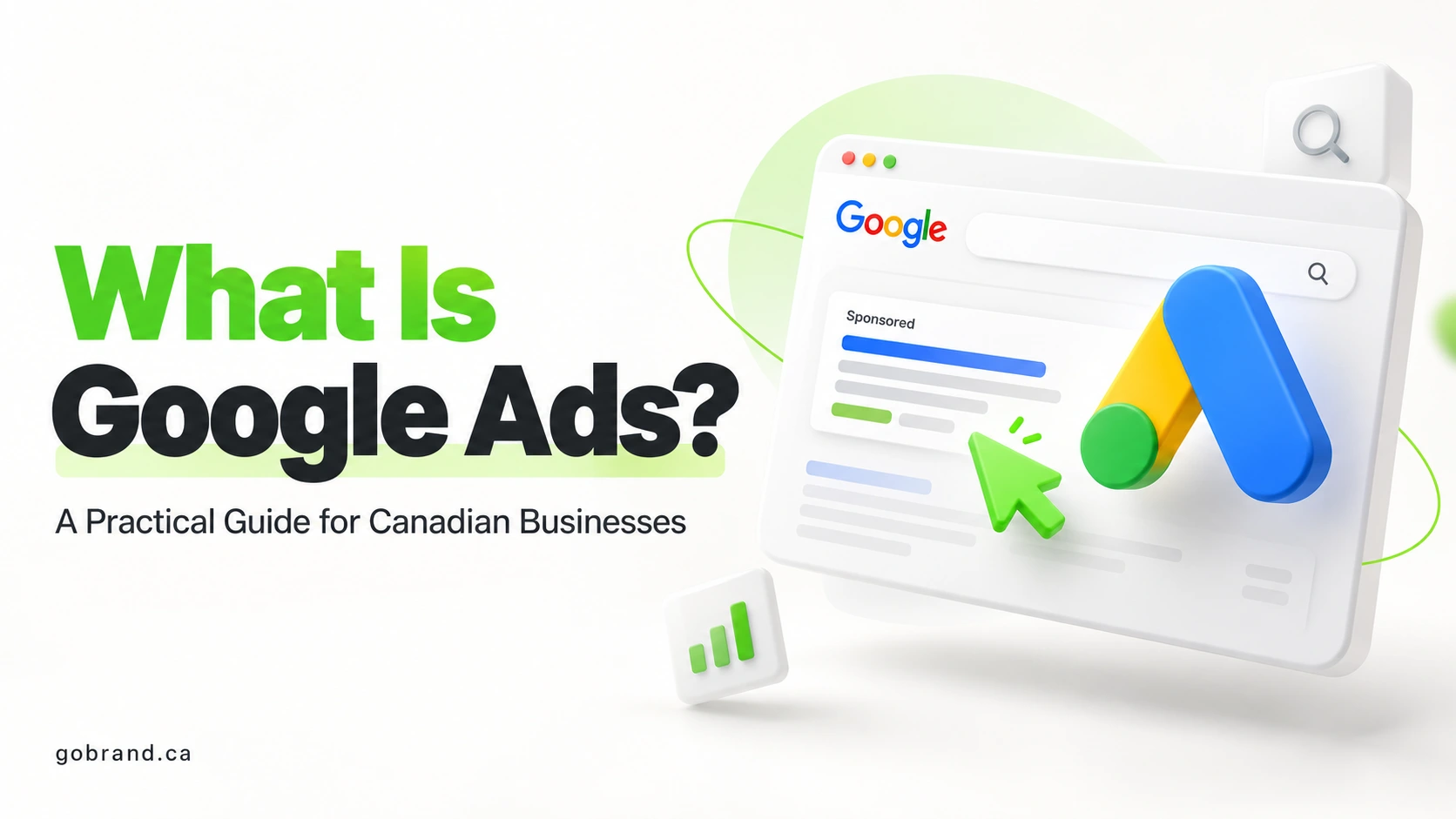
Google Ads is Google’s online advertising platform. It allows businesses to promote products and services across Google Search, YouTube, websites, apps, and other eligible placements.
Businesses can use it to support different goals, including generating enquiries, increasing online sales, encouraging phone calls, and building awareness.
Google Ads is often associated with pay-per-click advertising, or PPC. With cost-per-click advertising, you pay when someone clicks your ad. However, not every Google Ads campaign charges in the same way. Depending on the campaign format and bidding setup, charges may relate to clicks, impressions, or video views.
For example, a Toronto business selling custom reception desks could advertise to people searching for that product. Someone who clicks the ad could land on a page showing available styles, dimensions, and a quote request form.
The click creates an opportunity. The website then needs to help that visitor take the next step.
How Does Google Ads Work?
For Search advertising, the process starts with understanding what potential customers are looking for and connecting those searches to a relevant offer.
1. Choose a Business Goal
Start with the action you want people to take.
An online store may want completed purchases. A local service business may need qualified phone calls or consultation requests. A B2B company may focus on quote enquiries.
A clear goal helps determine how to structure the campaign and measure its results. Google’s setup guidance also recommends configuring conversion tracking before launching campaigns intended to drive online conversions.
2. Connect Searches to Your Offer
For a keyword-based Search campaign, you select keywords related to your products or services.
A commercial cleaning company might consider phrases such as:
- Commercial cleaning services Toronto
- Office cleaning company
- Business cleaning services near me
The important distinction is search intent. Someone searching for “office cleaning prices” may be evaluating a service, while someone searching for “office cleaning jobs” is likely looking for employment.
Your campaign should reflect the customers you want to attract.
3. Compete in an Ad Auction
Google uses an auction to determine which eligible ads appear and how they are positioned.
The highest bid does not automatically secure the best placement. Google also considers factors such as ad and landing page quality, auction competition, search context, and the expected impact of ad assets.
That makes relevance essential. An ad about office cleaning should lead to a useful office cleaning page that matches the visitor’s expectations.
4. Turn Visits Into Meaningful Actions
Once someone reaches your website, the page needs to make the next step clear.
For a service business, that could mean requesting a quote. For an ecommerce store, it could mean selecting a product and completing checkout.
A useful landing page answers practical questions: What do you offer? Who is it for? What does it cost, or how can someone request pricing? Why should they trust your business?
What Are the Main Types of Google Ads Campaigns?
Google Ads includes several campaign types. Each serves a different purpose, so your choice should follow your business goal.
| Campaign type | Main purpose |
|---|---|
| Search | Reach people searching for relevant products or services. |
| Shopping | Promote products through listings featuring details such as images and prices. |
| Display | Reach audiences through visual ads across eligible websites and apps. |
| Video | Use video advertising on YouTube and other eligible placements. |
| Demand Gen | Reach and engage audiences through visual advertising experiences. |
| Performance Max | Use a goal-based campaign to access inventory across Google’s advertising channels. |
Shopping campaigns are especially relevant to ecommerce businesses, while Search campaigns can suit businesses seeking enquiries from people actively researching a service.
Performance Max provides broader channel access, but it still requires clear objectives, suitable creative assets, and reliable measurement. The right campaign type depends on what you sell and how your customers make decisions.
How Much Does Google Ads Cost in Canada?
There is no single Google Ads price that applies to every Canadian business.
Costs vary according to competition, the audience you want to reach, your campaign setup, and the type of advertising you run. Businesses choose their budgets, while actual advertising costs depend on how campaigns participate in auctions and generate billable interactions.
It also helps to separate two expenses:
- Advertising spend: The amount paid to Google for running ads.
- Management fees: Any separate amount paid for campaign planning, setup, monitoring, and optimisation.
A useful budget discussion starts with your business economics.
Suppose a business spends CAD $600 and receives 20 enquiries. Its advertising cost per enquiry is CAD $30. If four enquiries become customers, the advertising cost per acquired customer is CAD $150.
This is a hypothetical calculation, not a performance forecast. Whether it represents a good result depends on the profit those customers generate and the other costs involved.
The cheapest click is not necessarily the most valuable click.
What Are the Benefits of Google Ads?
Reach People With Relevant Intent
Search advertising can connect your business with people who are already looking for a solution.
A search such as “custom reception desk Toronto” gives a business more information about the person’s immediate interest than a general website visit.
The opportunity is strongest when the search, ad, and landing page all address the same need.
Focus on the Markets You Serve
Campaign settings include location targeting, allowing businesses to shape where they advertise.
For a Canadian business, the practical starting point is its actual service or delivery area. A Toronto company serving local customers needs a different geographic approach from an ecommerce store shipping across Canada.
Measure Business Outcomes
Conversion tracking helps connect advertising activity with actions such as purchases, submitted forms, and calls.
Google recommends checking that tags work correctly, conversion settings match business goals, and test actions are recorded as expected. Without dependable tracking, it becomes harder to assess which campaigns deserve continued investment.
Learn From Customer Behaviour
Campaign performance can help you investigate which offers attract interest and where visitors lose confidence.
For example, if a product receives clicks but few purchases, the next investigation might involve pricing, delivery costs, product information, or checkout usability.
Advertising data becomes more useful when it informs improvements beyond the ads themselves.
Google Ads vs. SEO: What Is the Difference?
Google Ads and search engine optimisation both support search visibility, but they work differently.
| Google Ads | SEO |
|---|---|
| Provides paid advertising placements. | Works toward visibility in organic search results. |
| Requires an advertising budget to keep campaigns running. | Requires ongoing work on content, technical performance, and website quality. |
| Allows campaign targeting and budget adjustments. | Builds visibility through useful, accessible, relevant website content. |
| Measures paid campaign performance. | Measures organic search visibility, traffic, and business outcomes. |
Businesses can use both as part of the same marketing strategy.
For example, a service page can support an advertising campaign while also being developed for organic search. The visitor benefits from clear information regardless of how they arrive.
What Should You Prepare Before Launching Google Ads?
A campaign needs somewhere useful to send visitors and a clear way to measure results.
Before launching, prepare:
- A specific offer: Make it clear what you sell and why someone should enquire or buy.
- A relevant landing page: Send visitors to content that directly matches the advertisement.
- A simple next step: Make forms, contact details, or purchase options easy to find.
- Accurate business information: Show your service area, availability, delivery details, and pricing where appropriate.
- Conversion tracking: Define the actions that represent genuine business value.
For ecommerce stores, check the full purchase journey. Unexpected shipping fees or missing product details can undermine an otherwise relevant ad.
For service businesses, check that the enquiry process works on mobile and that someone can respond promptly.
Common Google Ads Mistakes to Avoid
Targeting Too Many Offers at Once
A small budget can become difficult to evaluate when spread across many products, locations, and unrelated searches.
A more focused initial scope makes it easier to understand what is generating useful results.
Sending Every Visitor to the Homepage
A homepage introduces the business, but it may not answer a specific search.
Someone clicking an ad for kitchen renovation should be able to find kitchen renovation information immediately.
Judging Success Only by Clicks
Clicks show that people visited. They do not establish whether those visits produced qualified leads or profitable sales.
Review results against the campaign’s business goal.
Ignoring Lead Quality
A campaign that generates many enquiries can still disappoint if most come from people outside your service area or looking for something you do not offer.
Connect advertising reports with feedback from the people handling enquiries.
Expecting Ads to Fix a Weak Offer
Advertising can bring attention to a business. It cannot remove every barrier to purchase.
Unclear pricing, limited information, slow responses, and a difficult checkout all deserve attention alongside campaign performance.
How GoBrand Can Help With Google Ads
An effective Google Ads strategy connects your audience, offer, website, and measurement.
GoBrand helps businesses approach paid advertising with a clear purpose: attracting relevant visitors and creating a practical path towards enquiries or sales.
The planning process should start with what matters to your business. Which services are the priority? Where are your customers? What makes a lead valuable? What does your website need to communicate before someone is ready to act?
These questions provide a stronger foundation than simply choosing keywords and launching ads.
Whether you are exploring PPC advertising for the first time or reviewing an existing campaign, a focused strategy helps you understand what you are paying for and what needs improvement.
Ready to discuss Google Ads for your business? Contact GoBrand to explore a campaign strategy built around your goals.