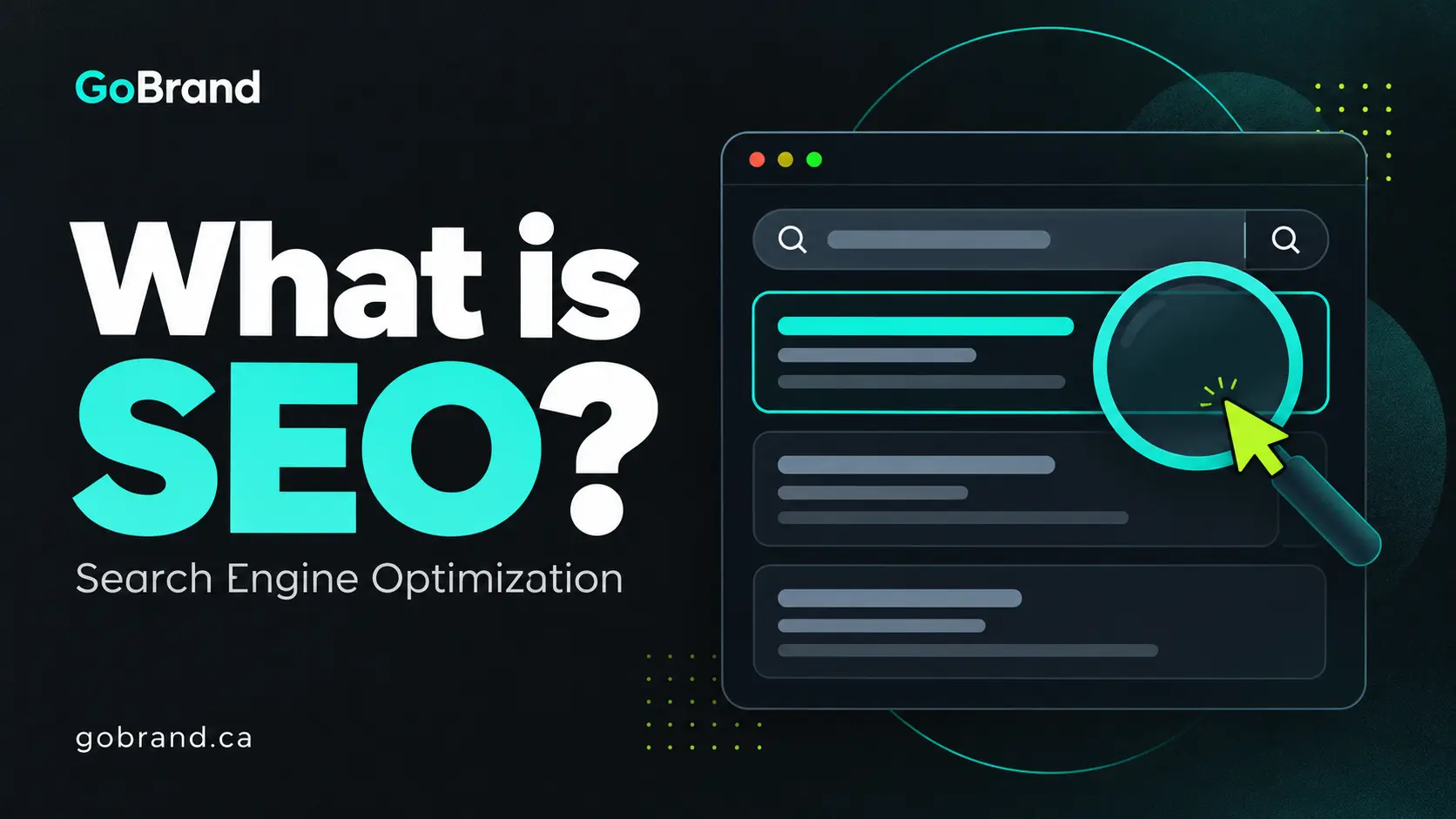
What is SEO? Think about the last time you needed a service, compared products, or looked for an answer. You probably opened Google, typed a few words, and explored the results.
Your potential customers do the same thing.
They search for a renovation company near them, compare materials for a home project, or look for a digital marketing agency that understands their business. Each search creates an opportunity for a relevant business to be discovered.
However, having a website does not automatically mean people will find it.
Search Engine Optimization, or SEO, is the process of improving your website’s visibility in unpaid search results. It helps search engines understand your pages and helps people find useful information related to what your business offers.
To understand SEO properly, it helps to look beyond rankings. A successful strategy connects three things: what people search for, the information your website provides, and the action you want visitors to take.
How Do Search Engines Work?
Before discussing keywords and website improvements, it is useful to understand how a page becomes eligible to appear in search results.
Search engines generally work through three stages: crawling, indexing, and serving results.
1. Crawling: Discovering Your Pages
Search engines use automated programs, often called crawlers or bots, to discover web pages. They find pages through links and other discovery methods, such as submitted sitemaps.
Imagine your website as a collection of connected rooms. Internal links act as doors that help visitors and crawlers move between them.
If an important service page has no links pointing to it from the rest of your website, it may be harder to discover. Clear navigation and relevant internal links help make your content accessible.
2. Indexing: Understanding and Storing Content
After discovering a page, a search engine may analyse its text, images, and other information to understand what it contains.
If the page is indexed, it becomes part of the search engine’s collection of content that can be considered for search results.
Discovery does not guarantee indexing. Technical restrictions, duplicate content, or other issues can affect whether a page is included.
For a business, this means publishing a page is only the beginning. You also need to check whether search engines can access and index it.
3. Serving Results: Matching Pages to Searches
When someone searches, the search engine evaluates indexed content to identify results that may answer the query.
For example, someone searching for “how to measure a wall for panels” needs instructions. Someone searching for “buy acoustic wall panels” is more likely to need a product or collection page.
SEO helps you create and organise pages around these different needs.
Why Is SEO Important for Businesses?
SEO gives your business an opportunity to appear while people are actively looking for something related to your offer.
A person searching for “custom reception desk Toronto” has already expressed a specific interest. A relevant page can introduce your business at that moment and explain whether your product meets their needs.
This makes SEO useful at several stages of the customer journey.
An informative article can introduce your brand to someone researching a problem. A comparison page can help them evaluate options. A service or product page can help them make an enquiry or purchase.
For example, a renovation company might build content around:
- “What happens during a bathroom renovation?” for early research.
- “Walk-in shower vs. bathtub” for comparison.
- “Bathroom renovation services in Toronto” for people looking for a contractor.
These pages serve different purposes, but together they create a more helpful website.
The business value comes from reaching relevant people and giving them a reason to continue—not simply collecting more visits.
What Are Keywords in SEO?
Keywords are the words and phrases people use when searching online.
They can be broad, such as “wall panels,” or specific, such as “wood acoustic wall panels for a home office.”
Keyword research helps you understand how people describe their needs. It also helps you decide which pages your website should have and what those pages need to explain.
A useful keyword is connected to your business, your audience, and the purpose of the page.
For example, “home décor” could attract many different interests. A business selling custom wooden event backdrops may find “wooden wedding backdrop” much closer to its actual offer.
Understanding Search Intent
Search intent is the reason behind a search. It helps you understand what kind of answer or page someone expects.
Common examples include:
| Search intent | Example | Suitable content |
|---|---|---|
| Informational | What is SEO? | An educational guide |
| Commercial research | Shopify vs. WordPress for a small business | A useful comparison |
| Transactional | Buy wooden event backdrop | A product or collection page |
| Navigational | GoBrand contact | A contact page |
Some searches have more than one possible intent. Looking at the existing results can help you understand what people are likely expecting.
If someone wants a step-by-step tutorial, a short sales page may leave their question unanswered. If they want to buy a product, a long article without product details may create unnecessary friction.
Using Keywords Naturally
Once you identify a relevant topic, use clear language in the page title, main heading, body content, and other appropriate places.
There is no need to repeat the same phrase in every paragraph.
A page about custom event backdrops can naturally discuss materials, dimensions, finishes, setup, and ordering. These details make the page more useful than repeatedly inserting “custom event backdrop” without adding information.
The Main Areas of SEO
SEO involves several connected areas. Each solves a different part of the visibility problem.
On-Page SEO
On-page SEO focuses on the content and elements within individual pages.
This includes:
- Clear, descriptive page titles.
- Headings that organise the topic.
- Relevant and accurate written content.
- Useful images and descriptive alternative text.
- Internal links to related pages.
- Concise meta descriptions.
Consider a service page titled “Our Services.” That title gives a visitor very little information.
“Kitchen Renovation Services in Toronto” communicates the service and location more clearly, provided that accurately reflects the business.
The content should then support that promise. Explain what the service includes, how the process works, what customers need to prepare, and how to enquire.
A strong page answers the questions someone would otherwise need to call or email to ask.
Technical SEO
Technical SEO addresses how search engines access and interpret your website.
Typical tasks include checking indexing settings, fixing broken links, managing redirects, reviewing duplicate URLs, and maintaining a logical site structure.
For example, a business might redesign its website and change several service page URLs. If old links lead to missing pages, visitors can reach a dead end. Appropriate redirects can help guide them to the relevant replacement pages.
Another example is an important page accidentally carrying a “noindex” instruction. The page may look perfectly normal to a visitor while telling search engines not to include it in search results.
These issues show why SEO cannot be assessed only by looking at a website’s design.
Content Creation and Improvement
Content gives search engines something to understand and visitors something useful to read.
For a business website, content includes product descriptions, service pages, case studies, guides, FAQs, and comparison articles.
The most useful starting point is often your customers’ questions.
A custom furniture business might regularly receive questions about materials, delivery, assembly, and finishes. Answering them clearly can improve the buying experience.
Original examples are especially valuable. Photos of completed work, explanations of your process, and specific product details help visitors understand what you actually offer.
Existing content also needs attention. Outdated prices, discontinued services, or unclear instructions can make a page less useful even when it still receives traffic.
Off-Page SEO
Off-page SEO concerns signals and activity beyond your own website, particularly links from other websites.
A backlink is a link from another website to yours. Relevant links can help people discover your business and can play a role in how search engines evaluate pages.
For example, a local publication might link to a renovation company when featuring one of its projects. An industry association might include a business in its member directory.
The relevance and context of these links matter. Buying large numbers of links purely to manipulate rankings can violate search engine spam policies.
A practical approach is to build a business and website that people have a reason to reference: useful resources, original work, credible expertise, and real professional relationships.
Local SEO
Local SEO focuses on visibility for searches related to a particular area.
This matters for businesses such as contractors, restaurants, salons, clinics, and agencies serving local customers.
Someone searching for “renovation company near me” needs different information from someone researching renovation ideas.
They need to know where you work, what you offer, and how to contact you.
Local SEO work can include maintaining an eligible Google Business Profile, keeping business information accurate, managing reviews appropriately, and creating helpful pages about your services and service areas.
Location pages should contain meaningful information. Changing only the city name across dozens of otherwise identical pages provides little value to readers.
SEO vs. Google Ads
SEO and Google Ads can both help a business reach people through search, but they operate differently.
SEO focuses on organic visibility. Google Ads allows you to pay for advertising placements through campaigns.
With SEO, you do not pay Google for each organic click. However, SEO still requires investment in content, technical work, strategy, and ongoing maintenance.
Google Ads requires advertising spend and campaign management. It can support a product launch, promotion, or immediate demand-generation goal once campaigns are approved and running.
Using ads does not buy better organic rankings.
The two channels can support a wider marketing plan. For example, a business could advertise a new service while developing detailed service pages and educational content that support organic discovery.
The right balance depends on your budget, competition, website, and business goals.
How Long Does SEO Take?
There is no fixed timeline that applies to every website.
A technical correction on an established site may have a different impact from launching a new website in a competitive industry. The amount and quality of existing content also affect the work required.
Some changes may show effects within weeks. More substantial progress can take months, and not every change produces a noticeable improvement.
For example, correcting an indexing issue addresses a specific barrier. Building visibility for a competitive service involves a broader process of improving relevance, content, and credibility.
Be cautious of promises such as “guaranteed number one on Google.” Search positions are not something an agency can guarantee.
A useful SEO plan explains what will be improved, why those changes matter, and how progress will be assessed.
How Do You Measure SEO Results?
Rankings provide one view of performance, but they do not tell the whole story.
A business needs to understand whether organic search brings relevant visitors and whether those visitors take useful actions.
Google Search Console can help you review search impressions, clicks, queries, and indexing information. Website analytics can help you understand what organic visitors do after they arrive.
Useful measurements include:
- Search impressions: How often your pages appear in search results.
- Organic clicks: How often people visit through those results.
- Relevant search queries: Whether you appear for topics connected to your offer.
- Enquiries and purchases: Whether organic visits contribute to business outcomes.
- Landing page performance: Which pages attract useful traffic and where improvements are needed.
For example, a blog post receiving thousands of visits may generate little interest in your services. A service page receiving fewer visits may produce several qualified enquiries.
Both pages can have a role, but traffic volume alone cannot tell you which is more valuable.
Common SEO Mistakes to Avoid
One common mistake is targeting broad keywords without considering relevance. A large audience is not automatically the right audience.
Another is publishing articles while leaving important product and service pages incomplete. Visitors still need clear information about what you sell and how to buy it.
Businesses also sometimes copy descriptions from other websites, repeat keywords unnaturally, or create many similar pages with little additional value.
A less obvious mistake is measuring progress without checking tracking. If enquiry forms or purchases are not recorded correctly, it becomes difficult to understand the contribution of organic search.
Finally, SEO should not be treated as a task that is completed once and forgotten. Your services, competitors, website, and customer questions change. Your content needs to remain accurate and useful.
Where Should a Small Business Start?
Start with the pages closest to your business goals.
If your priority is bathroom renovation enquiries, review that service page before publishing unrelated articles. If you sell products, check whether your key product and collection pages contain the information customers need.
Then work through a practical sequence:
- Confirm that important pages can be accessed and indexed.
- Identify the searches most relevant to your products or services.
- Improve the pages that should answer those searches.
- Add helpful content based on real customer questions.
- Connect related pages through useful internal links.
- Measure enquiries, purchases, and search performance.
- Use the findings to decide what to improve next.
This creates a clear relationship between SEO activity and business priorities.
Build a More Search-Friendly Website with GoBrand
SEO works best when your website’s content, structure, and business goals support each other.
People need to find your pages, understand your offer, and feel confident about taking the next step. That requires useful information, a website that works properly, and a strategy based on the customers you want to reach.
At GoBrand, we help businesses improve their online presence through SEO, website design, and digital marketing services.
Whether you are launching a website or improving an existing one, we can help you identify priorities and develop a practical approach to search visibility.
Contact GoBrand to discuss your website and SEO goals.